
Publish Date: May 2026
Something is happening with Sardinia.
At this year’s DUCO, one of the luxury travel industry’s most important gatherings, it was the destination that kept surfacing in every conversation. Not as a passing trend. More as a quiet recognition that this island has been offering something the rest of the Mediterranean simply can’t, and the wider travel world is finally paying attention.

If you’ve traveled Italy before, you likely know the mainland well. The Amalfi cliffs, the galleries of Florence, Rome in late afternoon light, Venice in every season. All of it is worth experiencing. But Sardinia is a different Italy entirely, one that even frequent visitors to the country tend to discover later, and once they do, tend to return to again and again.
What Makes Sardinia Different
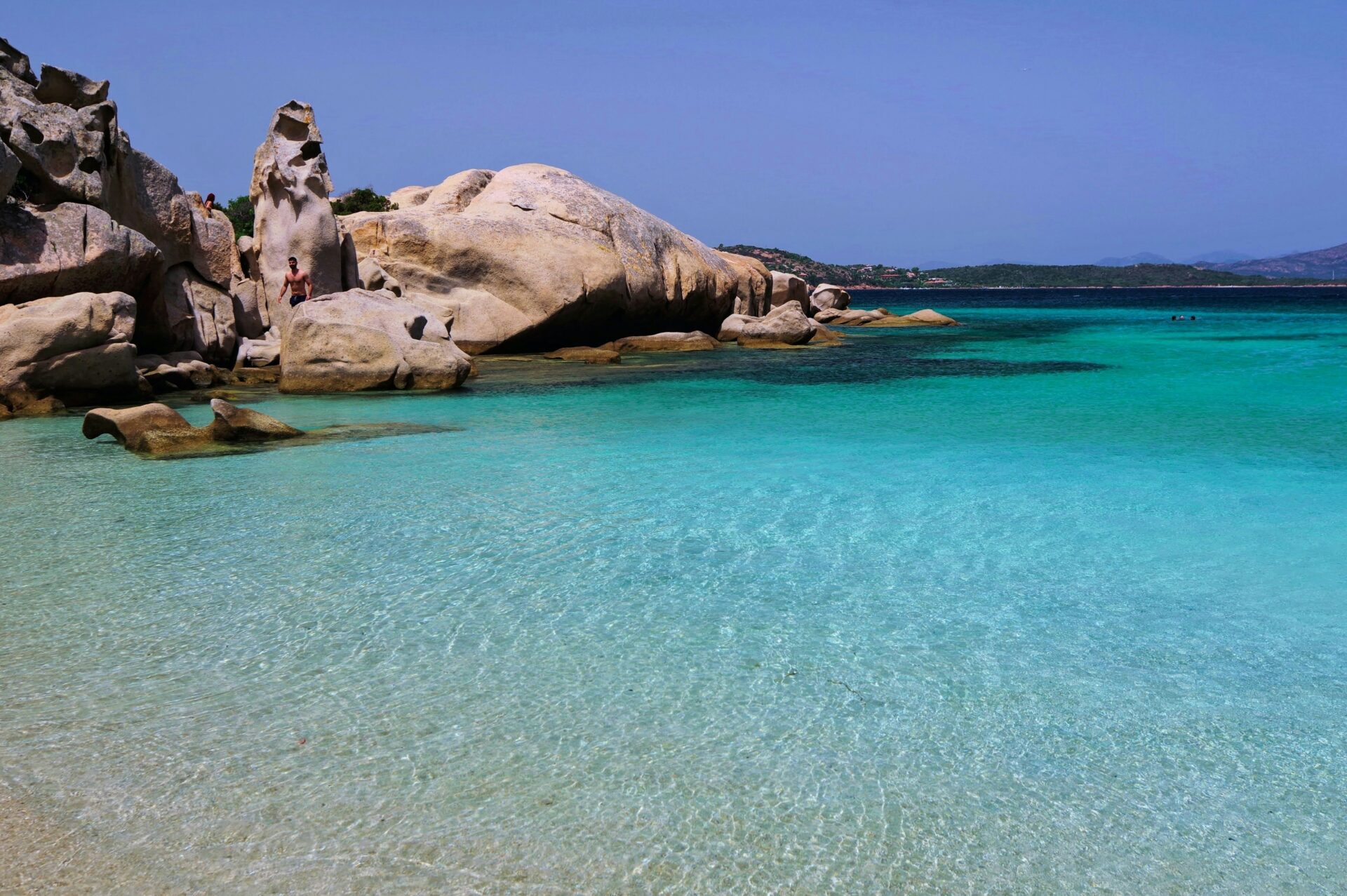
It starts with the water. This needs to be said plainly because photographs genuinely don’t convey it: along the northeastern coast, the sea shifts between emerald and turquoise depending on the hour, so clear and shallow that you can wade far from shore and still see your feet on the sand below. The beaches aren’t manufactured or manicured. They’re simply there. White sand meeting granite, backed by juniper and wild myrtle, some reachable only by boat or a path you’d walk right past if you didn’t know to look.
The Costa Smeralda, Sardinia’s most celebrated stretch of coastline, has drawn Europe’s most discerning travelers for sixty years without ever becoming what the Amalfi Coast or the French Riviera became. There are no crowds funneling toward one famous promenade. No single attraction pulling every visitor to the same viewpoint. Instead you’ll find small harbors, quiet coves, and villages built from granite that seem to grow out of the rock rather than sit on top of it. Porto Cervo has been a destination for private yachts and understated wealth since the 1960s, but the glamour here wears itself lightly. You feel it without being confronted by it.
That quality, that sense of restraint paired with genuine sophistication, is a large part of what makes Sardinia so appealing to the kind of traveler who has seen a great deal of the world and knows the difference between a place that performs luxury and a place that simply lives it.
The Food is Not What You Expect
Sardinian cuisine has almost nothing to do with what most people think of as Italian food. Pane carasau, the paper-thin flatbread baked in stone ovens, appears at nearly every meal. Bottarga, cured mullet roe, is shaved over pasta or served on its own with olive oil and lemon. Suckling pig is slow-roasted over aromatic wood in a tradition that goes back centuries. The pecorino tastes different in every village because every shepherd’s pasture is different, and the wines, Vermentino and Cannonau, are finally earning the global recognition they’ve quietly deserved for decades.
You eat differently in Sardinia than you do anywhere else in Italy. The flavors are rougher, more elemental, closer to the land and the sea. And that difference is part of what stays with you long after the trip ends. If you’ve ever returned from Italy and felt that the food was the thing you missed most, Sardinia will give you an entirely new set of cravings.
Let our travel agents specializing in Italy travel curate the perfect itinerary for your next delicious vacation.
The Properties Reflect the Island
What sets the best Sardinian hotels apart from their counterparts elsewhere in the Mediterranean is how deeply they belong to the landscape. The best properties here don’t compete with the scenery. They’re built into it.
Hotel Pitrizza was designed in 1963 by the Italian architect Luigi Vietti and set into the rolling hills of the Costa Smeralda with such care that the rooftops are covered in natural grass. Its seawater infinity pool, the first ever created in the history of hospitality, was carved directly from Sardinian granite. Forty-nine rooms and sixteen villas. A private beach on one of the most secluded bays on the coast. Handcrafted Sardinian furniture, whitewashed walls, and the Pitrizza Restaurant overlooking Liscia di Vacca Bay. Nothing here tries to be louder than the landscape it sits in, and that is precisely why, sixty years later, it still feels like the definitive Costa Smeralda experience.
7Pines Resort Sardinia takes a different approach, and a compelling one. Situated in a cove in Baja Sardinia overlooking the marine protected area of the Maddalena archipelago, the resort spreads across fifteen hectares of fragrant gardens with seventy-five individually designed rooms and suites. The culinary program is exceptional: Capogiro holds a Michelin star, and Spazio by Franco Pepe, widely regarded as the world’s finest pizzaiolo, has a dedicated restaurant on property. The Pure Seven Spa is serious about wellness. And in the evenings, sunset rituals and curated music give the property a pulse that is distinctly its own. You can want both deep relaxation and something to look forward to after dark. 7Pines understands that.
Abi d’Oru Beach Resort holds a quieter kind of distinction. Built in 1963 as the very first hotel in Porto Rotondo, before the Costa Smeralda even had a name, it sits directly on Marinella Beach, one of the most beautiful bays in all of northeastern Sardinia. The property was recently renovated and now offers a hundred and thirty-one rooms, three restaurants, three bars, and a private jetty that welcomes yachts up to fifty-five metres. The name means “Golden Bee” in Sardinian, and that warmth runs through everything here, from the Bee Happy Kids Club to the signature scent developed specifically for the property by an internationally renowned perfumer. Whether you’re traveling as a family or as a couple, whether you arrive by car or by sea, Abi d’Oru is the kind of place that delivers extraordinary beachfront hospitality without a trace of pretense.
When to Go and Why Planning Ahead Matters
Sardinia’s season runs from late May through September. June and early September offer the best of both: warm weather, swimmable water, and a coastline that hasn’t yet reached peak capacity. July and August bring the highest energy and the fullest hotels, which is perfect for some travelers and precisely what others prefer to avoid.
The properties that define a Sardinia trip, the ones listed above, tend to book well in advance for peak season. If Sardinia is forming in your mind as a real possibility for this summer or next, the time to start the conversation is now. Not because of artificial pressure, but because the best version of this trip takes lead time and local knowledge to plan well.
Our advisors know these properties, know this coastline, and know how to build a Sardinia itinerary that matches what you’re actually looking for rather than what a search engine suggests. That distinction matters more in Sardinia than in most places, because the island rewards intention. The travelers who arrive with a thoughtful plan leave with something closer to what this place is actually capable of giving.
Insider Travel Tips for 2026
- Best Times to Visit: Late spring (May–early June) and early autumn (September–October) offer warm weather, ideal swimming conditions, and fewer crowds.
- Transportation: Consider a private driver for scenic routes in Sardinia or a helicopter transfer between destinations like Portofino and Florence for efficiency and jaw-dropping views.
- Reservations: Book high-end properties and dining experiences at least 6 months in advance, especially in July and August.
- Local Flavor: Embrace the local rhythm—long lunches, late dinners, and unhurried afternoons with a view are central to Italy’s coastal lifestyle.
Ready to plan your perfect 2026 escape to the Sardinia?
Let’s craft a personalized itinerary that includes every indulgence—private villas, luxury yachts, Michelin-starred dining, and once-in-a-lifetime experiences tailored just for you. Contact us!
